

US Celebrities like George Clooney Choose Europe: Acquiring German Citizenship
Some US celebrities have obtained German citizenship. The process can offer advantages for those seeking a future in Europe.
US Celebrities like George Clooney Choose Europe: Acquiring German Citizenship
Some US celebrities have obtained German citizenship. The process can offer advantages for those seeking a future in Europe.
The recent decision by prominent figures, such as American actor George Clooney and his wife, Amal, to acquire French citizenship highlights a phenomenon of growing significance in today’s political landscape: the deliberate diversification of citizenship in response to domestic political developments. While the Clooneys chose France, Germany is also emerging as an attractive destination for US citizens looking to add a second citizenship.
Germany offers an appealing option for Americans seeking to expand their citizenship options, with its stable legal system, robust economy, and central role in the European Union. Unlike in the past, when German citizenship almost always required renouncing one’s existing nationality, the reform of citizenship law that took effect in June 2024 has opened new possibilities: multiple citizenship is now generally permitted, making it significantly easier to acquire German nationality.
The 2024 Reform of German Citizenship Law
With the reform of the Citizenship Act that took effect on June 27, 2024, Germany has taken a decisive step towards a more modern naturalization policy. The most important change: the general acceptance of multiple citizenship. While previously those seeking naturalization generally had to renounce their existing citizenship, applicants can now retain their original nationality. This applies explicitly to US citizens as well.
Additionally, the required residence periods have been shortened. Instead of the previous eight years, naturalization is now generally possible after five years of lawful residence. These reforms make Germany an even more attractive destination for US citizens seeking second citizenship.
Requirements for Naturalization
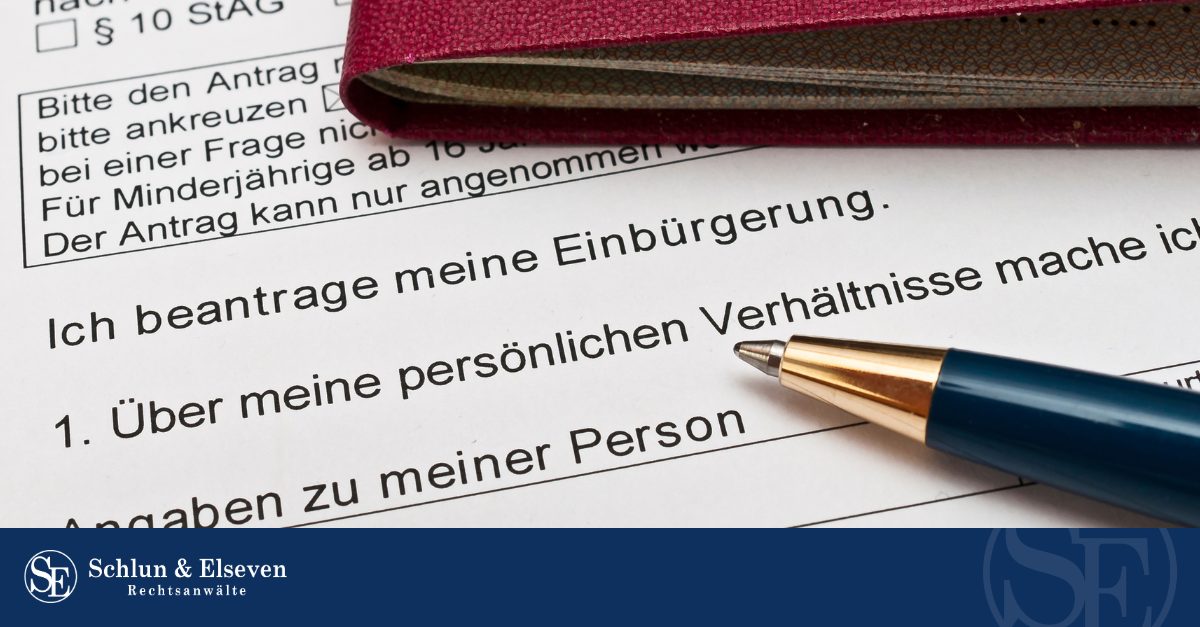
For US citizens, the general naturalization requirements outlined in Section 10 of the Citizenship Act apply. The applicant must hold a permanent residence permit or a residence permit intended for long-term stay in the country. For US citizens who have established themselves professionally in Germany, this is often an EU Blue Card (a work and residence permit for highly skilled workers) or a residence permit under Section 18a or 18b of the Residence Act (permits for qualified professionals and skilled workers).
Identity and citizenship must be proven beyond doubt through valid travel documents. A central requirement is financial self-sufficiency without relying on social benefits.
Sufficient knowledge of the German language must be demonstrated, typically through a B1 certificate of the Common European Framework of Reference (intermediate level). Additionally, knowledge of the German legal and social system must be proven through the naturalization test, which consists of 33 questions, at least 17 of which must be answered correctly. Another essential requirement is a commitment to the free democratic principles outlined in the Basic Law (Germany’s constitution). Finally, applicants must have no relevant criminal convictions.
Acquiring German Citizenship as a “Distinguished Foreign National”?
George Clooney, his wife Amal, and their two children obtained French citizenship through the “l’étranger émérite” (“distinguished foreign national”) procedure. This allows French citizenship through naturalization to be granted to any francophone foreigner who applies and, through their outstanding achievements, contributes to France’s reputation and the prosperity of its international economic relations, upon proposal by the Foreign Minister.
This may lead Americans to wonder: Does such a procedure exist under German law? What legal requirements must be met for naturalization in Germany? What are the advantages and disadvantages of dual citizenship? And how does the process work in practice? These questions have gained practical relevance amid political uncertainties in the US—not just for celebrities, but for all US citizens living in Germany or with German ancestry.
Special Pathways to German Citizenship
While Germany lacks a procedure equivalent to the French “l’étranger émérite“, there are alternative routes to German citizenship. Individuals descended from a German parent may already possess German citizenship. Under the principle of descent, a child acquires German citizenship at birth if at least one parent is German.
Americans whose German ancestors fled Nazi Germany for political, religious, or racial reasons may, under certain conditions, apply for renaturalization under Article 116(2) of the Basic Law. This particularly affects descendants of Jewish refugees and others persecuted by the Nazi regime.
Former German citizens who lost their citizenship through marriage to a foreign national or by acquiring foreign citizenship before January 1, 2000, can also reclaim German citizenship under simplified conditions.
Dual Citizenship: Rights and Obligations
As a German citizen, you receive all rights granted by the Basic Law (the German constitution). These include unrestricted rights to live and work in Germany and all EU member states, the right to vote and run for office in all German elections, and consular protection through German embassies and consulates worldwide. The German passport enables visa-free travel to numerous countries.
German citizenship also comes with obligations. Military service has been suspended since 2011, though it could be reinstated during a national emergency or war.
Tax implications: Germany taxes based on residence, while the US taxes based on citizenship. Americans living in Germany must therefore file tax returns in both countries, although the US-Germany tax treaty prevents them from being taxed twice on the same income.
German citizens generally cannot be extradited to the US under Article 16(2) of the Basic Law, which prohibits the extradition of German citizens to non-EU states.
The Naturalization Process: Procedure and Duration
The application is submitted to the local naturalization authority (typically at the city or district level). It must include extensive documentation, such as a valid passport, birth certificates, proof of residence status, and financial self-sufficiency, as well as language certificates, a police clearance certificate, and additional documents depending on the individual case. All foreign documents must be submitted with certified translations.
Processing times vary considerably. In straightforward cases, the process typically takes six to twelve months; in more complex cases, it may take two years or more. Once approved, the applicant receives a naturalization certificate, and German citizenship is acquired upon issuance of the certificate. The costs are €255 for adults and €51 for minor children, plus additional expenses for translations and document procurement.
Schlun & Elseven: Professional Support with Naturalization
The path to German citizenship can be complex and lengthy. At Schlun & Elseven, we have comprehensive expertise in citizenship law and successfully guide American clients through the naturalization process. Our services include reviewing individual eligibility, obtaining and preparing all required documents, including apostilles and certified translations, as well as handling all communication with German authorities. We specialize in establishing German citizenship through descent and in renaturalizations.




International expertise

Interdisciplinary

Transparent processes

Personalised
Contact Schlun & Elseven Rechtsanwälte
Legal Representation Throughout Germany
Please use the form below to tell us about your legal matter.
Once we receive your enquiry, we will provide an initial assessment based on the information you have supplied and send you a transparent fee proposal.
Your Benefits


Legal Representation Throughout Germany
Alternatively, you can contact us directly using the contact details provided.
- 24h Contact: +49 221 93295960
- Email: info@se-legal.de


